
A lot is written about big department stores concepts. All concepts with one meaning, which is earning as much profit as possible.
A BBC article of Tim Harford, on how some modern concepts were born, gives insights in use and means of today’s department shops: https://www.bbc.com/news/business-40448607
From shop to total shop
The readers of the article are informed on how big warehouses came to existence. But quite recent, big department stores are losing profit and some are even closing due to bankruptcy.
If you need an example, you could read following article: https://www.cnbc.com/2018/12/31/here-are-the-retailers-including-sears-that-went-bankrupt-in-2018.html, a list of all bankrupt U.S. retailers in 2018.
Tim Harford
speaks of the birth of ‘Total Shopping’ and the low priced focus shops. Both
issues are an important reason behind so many bankruptcies. The idea of a huge
assortment for the lowest price were winning trademarks, however too many
competitors had the same main concept.
The total retailer market got bigger for the same customer range, competing
without enough differentiation.
Customer first
Changing a persons’ view, certainly if that view is gaining profit and ease, to worse conditions is difficult. For sure if that person is the customer (king), they will not accept paying more for less luxury.
In Belgium, some of the retailers understood it, since they are going back to former small, more profitable, groceries. E.g. Carrefour and Delhaize started small scale ‘Express’ shops, with higher prices and lower range.
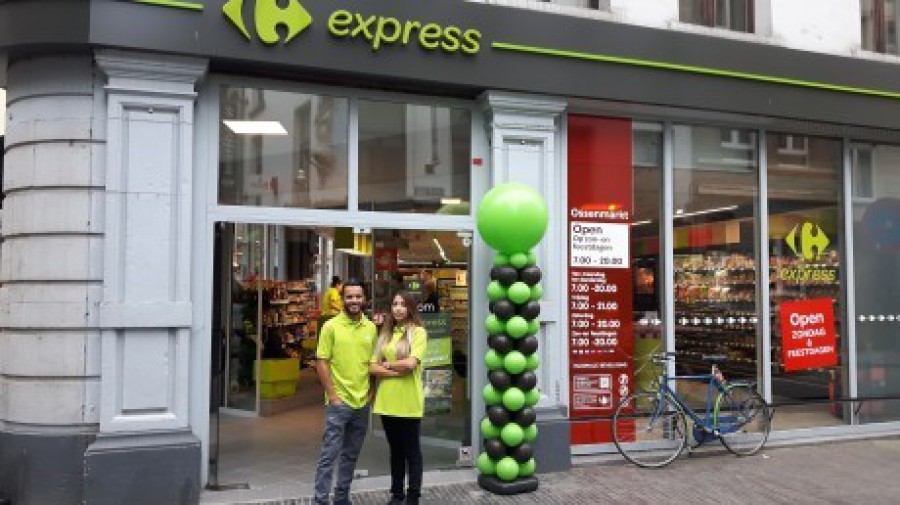
The funny thing is, that most old convenience stores were put out of the market by department stores, only to reinvent the same concepts decades later.
I have some
good memories from some former groceries, where the owners were just another
daily talk. Still a bit different than the current Express shops.
In one of my former blogs (https://wordpress.com/read/blogs/158319622/posts/126) I argued about buying rationally
against emotionally. The main concept spoke about brands and product feelings.
It is just now that I’m realizing the former groceries used to had a to-the-person
emotional addition, embedded in the P of Place.
Worldwide
The latest trend we see is big companies clustering together to maximize market share, even so for retailers. They even do not stay bound to one country anymore.
To avoid loss in profit, they try to grow their turnover by enlarging their market share. Not only the turnover, but also costs need to be as little as possible. New concepts have risen, like a self-service checkout or reducing marketing costs. Marketing nowadays is done by the brands themselves, not by the retailers themselves anymore.
One big problem of this clustering and cost focus, is the negotiation with their suppliers. Because their big selling volume and lessen competitors, they manage to receive the lowest prices as possible. The best example is the efforts of agriculture industry to group themselves to be able to stand their ground in price negotiations.
Conclusion
The current
Total Shopping idea still exists, the article title ‘How department stores
changed the way we shop’ is still valid. But looking into the future, with the
current retailers’ problems or upcoming of digital buying and home-delivery,
warehouses might not be the main market leaders anymore.
If in 10 or 20 years someone asks for a decent article about the upcoming of
retailers, Tim Harford could simply change his title: ‘How department stores used to change the way we shop’.
 Big Data Amusements